
Blog · Pillar guide
Why Blood Trails Stop (and What to Do When Yours Does)
Cade Paddock on the reasons a good shot can still leave you without a trail, and the decisions that matter most in the first hour.
By Indiana Deer Recovery, reviewed with Cade Paddock. Published .
Coming fall 2027. Field searches aren’t available yet.
Blood trails stop for ordinary reasons: the arrow plugs the wound, fat or intestines seal it, rain washes it away, or the deer gets pushed and keeps running. None of that means the deer is gone. It means the next hour of decisions matters more than the last minute of tracking.
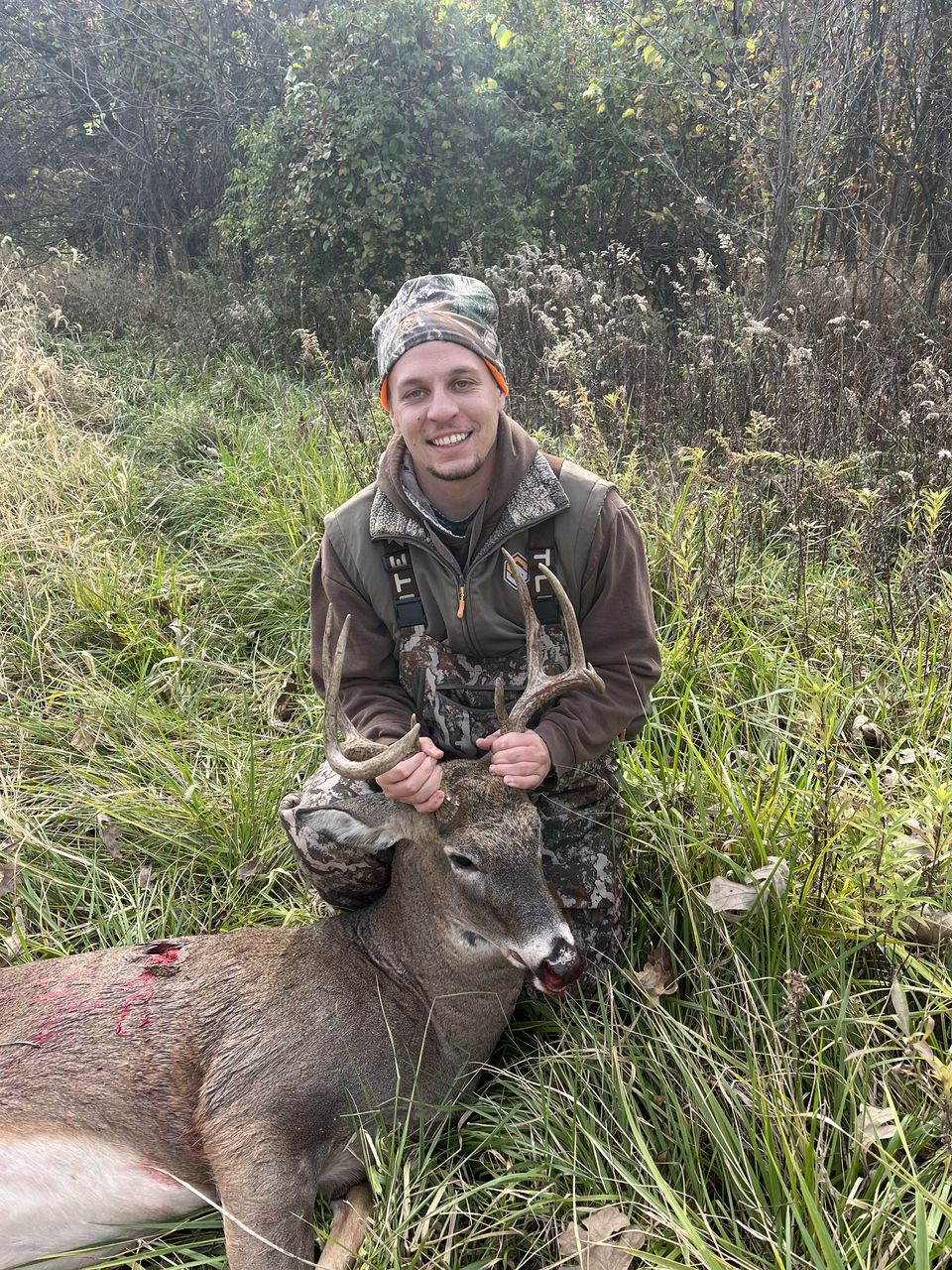
“In 18 years of chasing deer across Indiana, I’ve learned that even a great shot doesn’t always mean an easy recovery,” says Cade Paddock. The rest of this guide is built on what he tells hunters who call.
Five reasons the trail goes quiet
The arrow stays in
An arrow that doesn’t pass through can stay in the deer and plug the hole, so blood stays inside instead of on the ground.
Fat or intestines seal the wound
Tissue can close an entry or exit hole and cut a heavy trail down to drops, or nothing.
Rain
Rain can wash a trail away in minutes.
The deer gets pushed
Push a deer too soon and it can run farther than you’d ever believe, and coyotes can find it before you do.
The deer is tougher than the shot
Deer full of adrenaline, especially rutting bucks, can survive into the next day on one working lung.
A clean shot is not a guarantee
Cade once shot a doe at 15 yards, broadside, right behind the shoulder, with a clean pass-through. They never found her, and a month later she showed up alive on his trail camera. Doing everything right doesn’t guarantee you’ll find your deer. It does mean you should make the next decisions carefully.
What to do when your trail stops
- Stop walking in, and flag or pin your last blood
- Pin where you shot from and where you last saw the deer
- Note the time of the shot and which way the deer ran
- Photograph the blood and your arrow
- Back out quietly and give the deer time, based on the hit
How long to wait depends on where you hit the deer. The National Deer Association explains how to read the arrow and blood in you just shot a deer: here’s how to find it. Our step-by-step: lost the blood trail? what to do next.
Where thermal helps
A thermal drone sees body heat instead of blood, so it doesn’t need a trail at all. It needs a good last-seen spot, a reasonable time since the shot, and cover with gaps the camera can see through. It also lets you search without stomping through every acre and bumping the deer again. How thermal drone deer recovery works. Searches start in fall 2027.
Or dial or text (317) 601-5169